
Quick answer
What causes a blocked drain outside a house in Edinburgh — and how do you fix it?
A blocked drain outside your Edinburgh house is most often caused by fat build-up, autumn leaf accumulation, tree roots, or cracked Victorian clay pipes. First try lifting the gully cover and removing debris by hand, then flush with a hose. If water still pools or backs up indoors, call a drainage specialist — most Edinburgh blockages clear within 60–90 minutes using high-pressure water jetting. Typical cost is £150–£280. Recurring blockages always need a CCTV survey to find the structural cause. Rhino Drain responds within 60 minutes across all EH postcodes. Call 0131 210 0042.
In this guide
What "outside drain" actually means
Most homeowners use "outside drain" loosely to mean anything beyond the kitchen sink. But your Edinburgh property has at least three distinct external drainage components, and identifying which one is blocked changes everything about the fix:
- The gully — the grated drain at ground level outside the kitchen or bathroom wall, catching wastewater from inside the house.
- The manhole / inspection chamber — the heavy cover (usually in your front path, back garden, or shared close) that gives access to the underground drain run.
- The soil stack and ground-level pipework — the vertical waste pipe carrying toilet and sink water down the back of the building, common in Edinburgh tenements.
A blocked gully is a 10-minute DIY job. A blocked manhole means the blockage is downstream and you need an engineer. The difference matters because solving one doesn't solve the other.
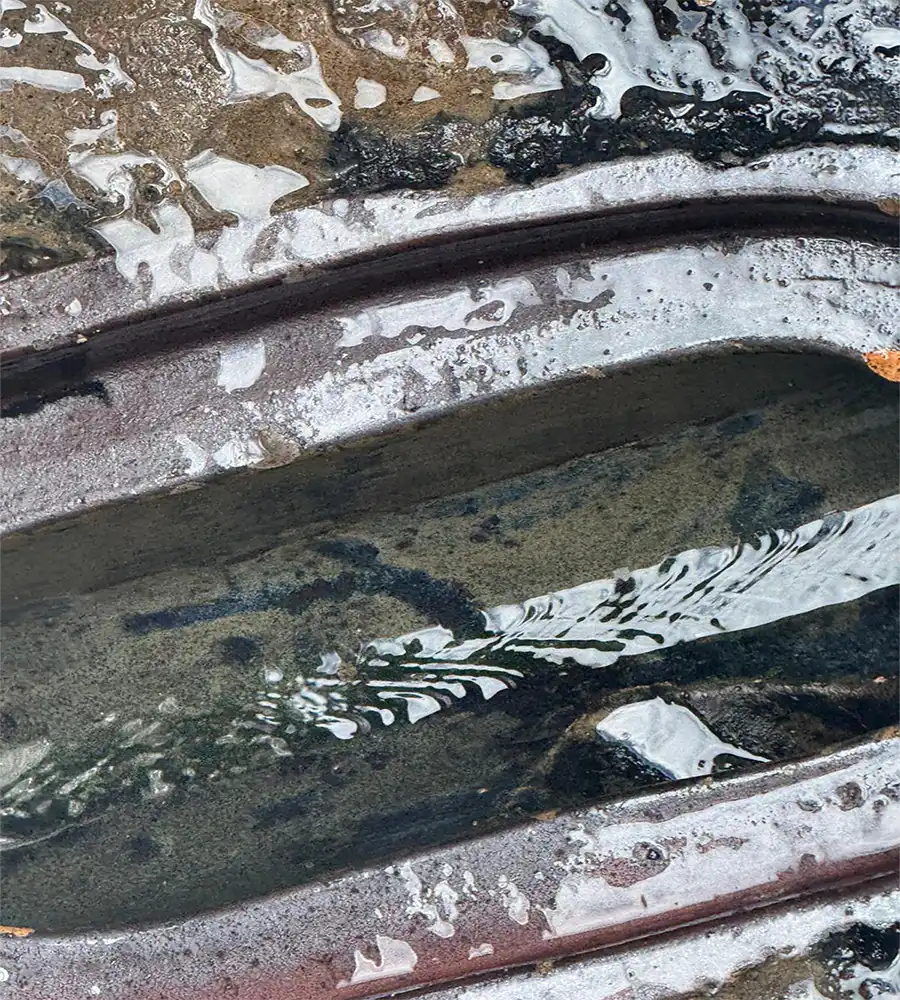
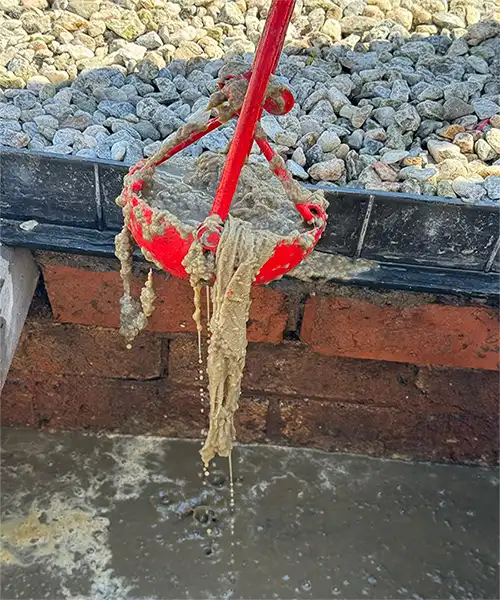
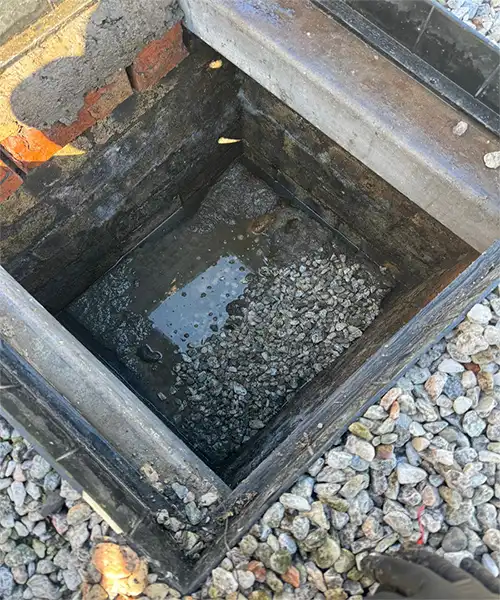
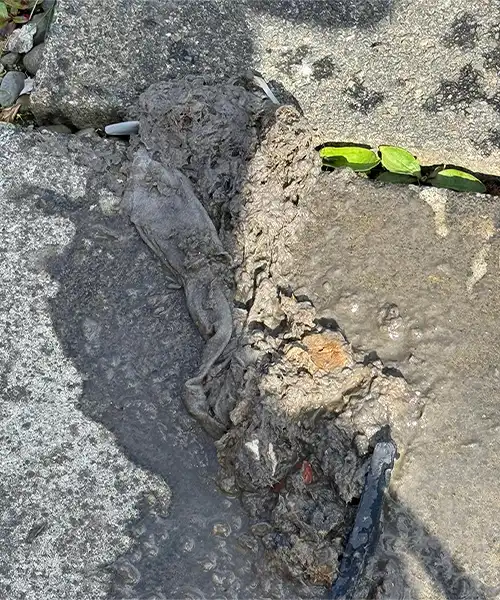
Loanhead Edinburgh, property soil drains blocked, carried out high pressure jetting, removal of multiple blocks including wet wipes, plastic toilet bowl freshener causing blockage
The 6 most common causes of outside drain blockages in Edinburgh
After years of jetting drains across every EH postcode, these are the culprits we find again and again — in roughly the order of how often they show up:
01
Fat, oil & grease (FOG)
The single biggest cause. Cooking fat poured down sinks cools, congeals, and slowly narrows the pipe until water backs up. Tenement kitchen waste runs especially prone.
02
Autumn leaves & garden silt
Edinburgh's leafy streets — Trinity, Morningside, Liberton — see gullies fill up every October and November. A single afternoon of rain after a leaf-fall can choke a drain entirely.
03
Tree roots
Roots seek moisture and find it in the smallest crack of a clay pipe. Once inside, they form a mesh that catches everything. Common in older streets with mature trees.
04
"Flushable" wet wipes
They aren't flushable. They form rags that knit together with fat to create what the industry calls "fatbergs". Responsible for a huge percentage of emergency callouts.
05
Cracked Victorian pipework
Many Edinburgh properties still run on original 19th-century clay drains. Ground movement, frost, and age cause hairline cracks that catch debris and admit roots.
06
Shared tenement drain misuse
In a tenement, one flat's poor drain habits affect everyone. A single neighbour pouring fat or flushing wipes can block the run for the whole property.
First-aid: try these 4 steps in 15 minutes
Before calling anyone, work through these in order. Most surface-level blockages clear at step 2 or 3:
- Lift the gully cover and clear visible debris Wearing rubber gloves, lift the grated drain cover outside your kitchen or bathroom wall. Scoop out leaves, silt, hair, and grey gunk by hand or with a small trowel. This alone fixes around 40% of "blocked drains" we'd otherwise be called to.
- Flush hard with a garden hose Put the hose into the now-clear gully and run it at full pressure for a solid 60 seconds. Watch whether the water drains away normally or pools.
- Use a drain rod or hand auger For deeper blockages, feed a rod into the pipe and rotate it clockwise only. Anti-clockwise unscrews the joints and you'll lose the rod inside the drain — we get called out for this regularly.
- Check the manhole cover Lift the nearest manhole cover (carefully — they're heavy). If it's full of standing water, the blockage is further downstream and DIY won't reach it. Stop and call an engineer.
Never use caustic drain cleaner
Supermarket drain unblockers rarely clear real blockages, damage Edinburgh's older clay and cast-iron pipes, and create a chemical burn hazard for any engineer who later removes the trap. A kettle of boiling water and a plunger is safer and just as effective for soft blockages.
Red flags: stop DIY immediately if you see any of these
Some symptoms mean the blockage is well past anything you can clear yourself. If you spot any of the following, put the rods down and call:
- Sewage smell indoors — wastewater is rising back up through traps or U-bends.
- Multiple drains slow at once — sink, toilet, and shower all sluggish means the blockage is on the main run.
- Water backing up from a manhole — the underground line is full. Stop using water in the house immediately.
- Gurgling toilet when you run a tap — trapped air is escaping past a partial blockage. Will become a full block soon.
- Sewage visible on the patio or in the garden — public health risk. Keep children and pets clear and call out a 24-hour service.
- Recurring blockages every few months — almost certainly structural. You need a CCTV survey, not another quick clearance.
"A drain that keeps blocking isn't unlucky — it's telling you something is broken downstream. The cheapest fix is finding out what."
What an Edinburgh drainage expert actually does on site
If you've never had a drainage engineer out, here's what to expect when one arrives — and what separates a proper drainage specialist from a general plumber with a plunger:
Step 1: Diagnose with a CCTV camera
The engineer feeds a small waterproof camera down the drain on a flexible rod. Live video appears on a monitor in the van. This identifies whether the blockage is soft (fat, wipes, leaves) or structural (root intrusion, fracture, collapse) — completely changing the right fix.
Step 2: Clear with high-pressure water jetting
For around 85% of outside drain blockages, a high-pressure water jet (around 3,000 psi) does the job. The angled nozzle cuts through fat, blasts out leaves and silt, and scours the pipe walls clean. This is the modern equivalent of drain rodding, and far more thorough.
Step 3: Mechanical rodding or root cutting (where needed)
Stubborn root intrusions need a rotating cutter head fed down the drain to chop and pull out the mass. Engineers will follow up with jetting to flush the debris through.
Step 4: Post-clearance camera check
A good engineer will run the camera again after clearing to confirm the drain is fully open and to spot any structural issues that caused the blockage. If they don't offer this, ask.
Why Edinburgh drainage is different from anywhere else
Edinburgh isn't a typical UK drainage market. Three things make it specifically challenging:
Victorian clay pipes everywhere
Properties in the New Town, Marchmont, Bruntsfield, and Old Town are still running on drainage installed in the 1800s. Clay pipes age, crack, and become magnets for root intrusion. Modern PVC repair sections often need to be cut in mid-job — something a generalist plumber may not have the parts for.
Tenement shared drains and factor coordination
A tenement flat shares its drainage system with every other flat in the block. When a blockage hits, the cost is typically split via the property factor — but the engineer needs to coordinate access through the close, deal with the factor, and document the work to the standard the factor requires. We do this routinely; ad-hoc tradesmen often don't.
Scottish Water responsibility lines
If the blockage sits beyond your property boundary, Scottish Water is responsible — not you. A CCTV survey is what proves where the blockage is. We've helped many Edinburgh homeowners avoid a £400 bill by demonstrating the issue was in the public sewer.
Listed buildings need extra care
If your property is in a conservation area or listed (much of the Old Town, New Town, and parts of Stockbridge and Bruntsfield), any external drainage work — especially excavation or pipe replacement — may need consent. We handle the paperwork and only use compliant techniques.
What it actually costs in Edinburgh, 2026
Here's our honest range for the work most homeowners need. These are typical Edinburgh figures, not the lowest-possible advertised "from" prices that tend to climb mid-job:
| Service | Typical Cost | Time |
|---|---|---|
| Gully clearance (surface blockage) | £79 – £140 | 30–60 min |
| Outside drain unblock with jetting | £150 – £280 | 60–90 min |
| CCTV drain survey + written report | £150 – £350 | 60–120 min |
| Root cutting + jetting combo | £220 – £400 | 90–180 min |
| Drain relining (per metre) | £180 – £350 | Half day |
| Excavation & repair of collapsed pipe | £600 – £2,500+ | 1–3 days |
Any company quoting dramatically less than the lower end of these bands is either underselling to win the booking and upselling later, or doesn't have the right kit. Always insist on a fixed price in writing after inspection.
How to stop it happening again
About half of the blocked drains we attend are repeat offenders that could have been prevented. Four habits that genuinely make a difference:
- Cover your gullies with mesh grids. A £5 stainless mesh stops leaves and grit reaching the pipe. Replace annually.
- Wipe pans before washing. Don't pour cooking fat down the sink. Even washing-up liquid only emulsifies it temporarily — it congeals further down the run.
- Get gullies cleared every autumn. A 10-minute job after the leaves fall prevents the winter emergency callout.
- Annual preventive jetting for tenements. Most factors will approve this from a budget for around £35–£50 per flat — far cheaper than an emergency unblock split between owners.
If you've had two or more blockages in 18 months, get a CCTV survey done while the drain is clear. The structural fault behind the recurring problem will only get worse — and catching it early can turn a £2,000 excavation job into a £400 reline.
Frequently asked questions
Quick answers to what Edinburgh homeowners ask us most.
Who is responsible for a blocked drain outside my house in Edinburgh?
If the blockage sits on your property (between your house and the boundary), you're responsible. If it's beyond the boundary or in a shared public sewer, Scottish Water handles it. In Edinburgh tenements, shared drains within the property are typically a factor matter, split between owners. A CCTV survey identifies exactly where the blockage is, which determines who pays.
How much does it cost to unblock an outside drain in Edinburgh?
Most outside drain blockages in Edinburgh cost £150–£280 to clear with high-pressure water jetting. Simple gully blockages start at £79. Major root or structural issues requiring excavation can reach £600–£2,500. We provide a fixed price in writing before any work begins, with no callout fee.
Why does my outside drain keep blocking?
Recurring blockages nearly always indicate a structural problem — usually tree root intrusion, a fractured Victorian clay pipe, a misaligned joint, or built-up fat scale. A CCTV survey is the only reliable way to diagnose the root cause. Repeated emergency clearances cost more in the long run than one survey plus a targeted repair.
Can I unblock an outside drain myself?
Yes — for surface blockages. Lift the gully cover, remove debris by hand, flush with a hose, and try drain rods (always rotating clockwise). Stop immediately if water backs up, multiple drains are affected, or you smell sewage — those signal a downstream blockage that requires professional jetting.
How quickly can you reach a blocked drain emergency in Edinburgh?
Our average response time is under 60 minutes across central Edinburgh (EH1–EH16) and 90 minutes for the wider Lothians. We operate 24/7, including weekends and bank holidays. Call 0131 210 0042 and we'll give an accurate ETA before dispatch.
Should I use chemical drain cleaner on a blocked outside drain?
No. Caustic drain cleaners rarely clear structural or root-related blockages, can damage Edinburgh's older clay and cast-iron pipework, and create hazardous conditions for engineers who need to access the drain afterwards. Mechanical clearing or high-pressure jetting is safer and more effective.
Will my home insurance cover a blocked drain in Edinburgh?
Most home insurance policies don't cover routine drain clearance, but many do cover damage caused by drain failure (e.g. water damage from a backed-up drain) and sometimes underground pipe collapse. Always check your policy wording and ask your insurer before agreeing to expensive work — we can provide CCTV evidence and reports formatted for insurance claims.
Outside drain still blocked? Let's get it sorted
One call, fixed price, 60-minute response across Edinburgh. No callout fee. No mid-job surprises. 4.9-star rated by Edinburgh homeowners.
0131 210 0042Available 24/7, every day of the year — including weekends and bank holidays.